
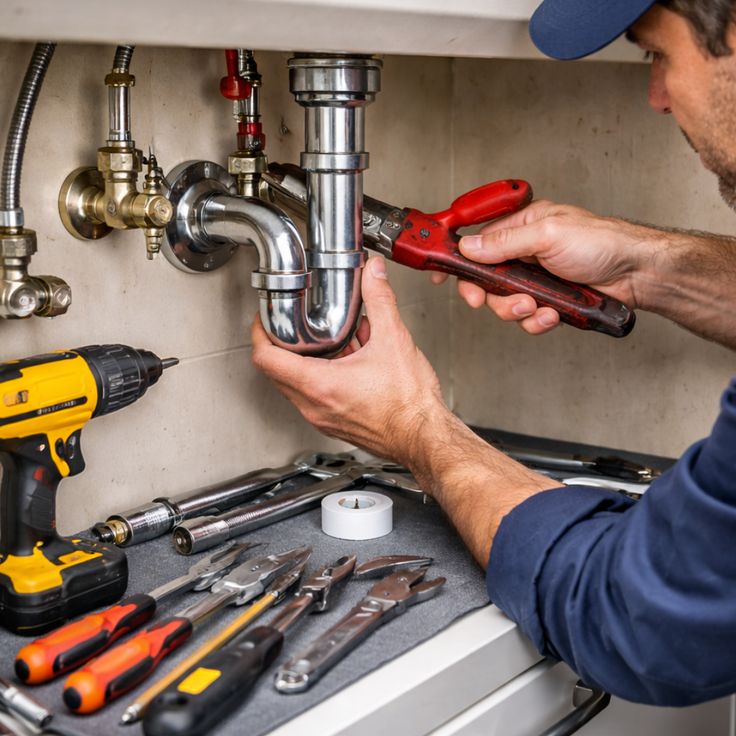
What is water pressure?Water pressure is the force that pushes water through your pipes and out of your taps, showers, and appliances. It affects how quickly water flows and how efficiently your plumbing system works.If your water pressure is too low, you may notice weak showers, slow-filling baths, or appliances that take longer to run. If it’s too high, it can put unnecessary strain on your pipes, taps, and fittings — potentially leading to leaks or damage over time.Most homes in the UK have a water pressure between 1 and 3 bar, depending on the location, property height, and how the water supply enters your home.
First Step:Recognise the signs of a pressure issue.
- Low pressure: trickling taps, slow-filling cisterns, or weak shower flow.
- High pressure: banging or noisy pipes (“water hammer”), dripping taps, or leaking joints.
Spotting these signs early helps prevent further plumbing problems.
Next Steps:1. Test your water pressure using a simple gauge
- You can buy an inexpensive water pressure gauge from most DIY or hardware stores.
- Attach it to a cold tap, such as the one on your kitchen sink or outdoor garden tap.
- Turn on the tap fully and read the dial: Below 1 bar: Low pressure, 1–3 bar: Normal range, Above 3 bar: High pressure
- Water pressure can fluctuate depending on how many people in your area are using water.
- Test in the morning, afternoon, and evening to see if there’s a consistent problem.
- If the pressure is too low, check isolation valves are fully open.
- Ensure taps, shower heads, and filters are not blocked with limescale or debris.
- If your pressure is too high, your system may already have a PRV fitted (usually near the stop tap or water meter).
- This can be adjusted by a professional to bring your pressure back to a safe level.
- If low pressure affects your entire property and persists over time, contact your water supplier — the issue may be with the mains supply.
Call a professional plumber if:
- You have consistently low or high water pressure throughout your home.
- You suspect leaks or damage caused by excessive pressure.
- You’re unsure how to safely adjust a pressure reducing valve.
- You’ve recently installed new appliances or fixtures that aren’t performing properly.